The Hidden Cost of Playing It Safe
There is a strange thing that happens when you try too hard to get life “right.” You start guessing what everyone else wants. You make the acceptable choice. The easily explained choice. The one least likely to offend, confuse, or take up too much space.
You tell yourself you are being careful. Sometimes you are. Other times, you are editing yourself out of your own life.
Playing it safe can protect you from an uncomfortable moment. It can also keep you from discovering what happens when you let yourself be fully seen.
The Safe Choice Can Hide What Makes You You
Last week, I walked into an in-person acting callback with a clear idea of how I wanted to play the character. I had prepared the scene, learned the lines, and carried over the choices I made in my first-round self-tape. My performance was muted. Controlled. I got through the first scene, giving the character the restraint I thought she needed. Then the casting director gave me a note: she wanted to see my personality. The scene was a long conversation in a car, and my character needed to help drive it. She wanted more of me.
That changed everything. On the next take, I let myself respond with more instinct, more personality, and less attachment to getting it “right.” The scenes that followed opened up, too. I had prepared for the role. However, I had also kept something essential outside the room: the parts of me that made my interpretation specific.
The choice I thought would serve the performance had made it less alive.
Why We Wait for Certainty
I continue to think about how often we do this beyond acting. We want to know the relationship will work before we become vulnerable. We want proof that the career change will pay off before we explore it. We want reassurance that an opportunity will lead somewhere before we say yes.
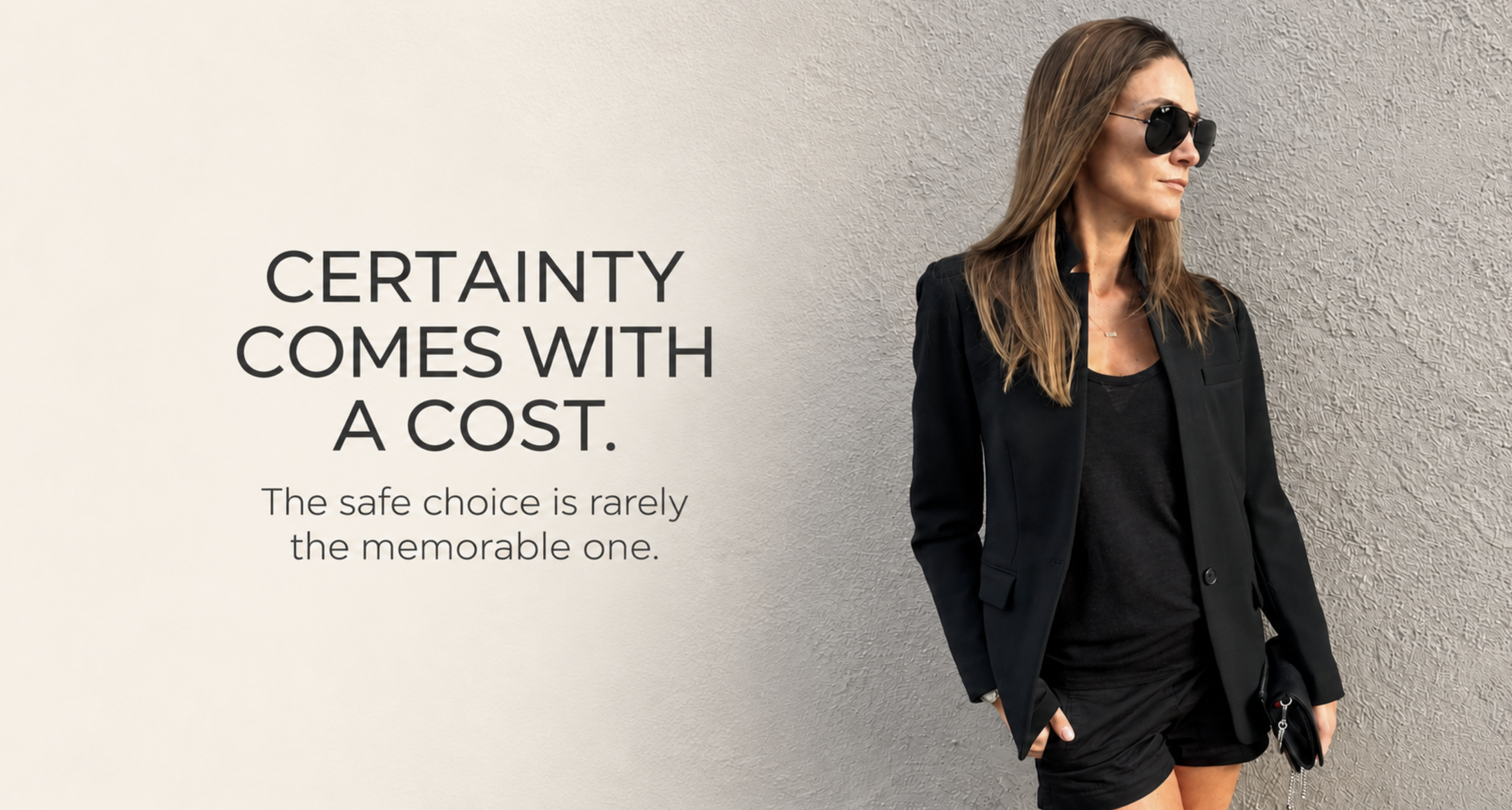
Wanting information is reasonable. The problem begins when we expect it to eliminate every possibility of disappointment. Certainty promises relief: If I know how this ends, I can avoid getting hurt.
However, a meaningful relationship, a creative project, or a different way of living often asks us to participate before we know the ending. The fear of making the wrong decision can quietly become a decision of its own: stay where you are.
What Are You Giving Up to Stay Comfortable?
Predictability has value. So does stability. The question is what you are giving up to preserve them.
Are you staying because something supports your life, or because explaining your departure would be uncomfortable? Are you choosing what you want, or what will require the least defense?
When every choice is organized around avoiding criticism, failure, or uncertainty, possibility gets smaller. You may become very good at maintaining a life you no longer feel connected to.
That is the hidden cost of playing it safe: the opportunities left unexplored, the conversations left unspoken, and the gradual habit of overriding your preferences until other people’s expectations become easier to hear than your own voice. You remain in the supporting role because stepping forward might draw attention.
How to Move Forward Without Every Answer
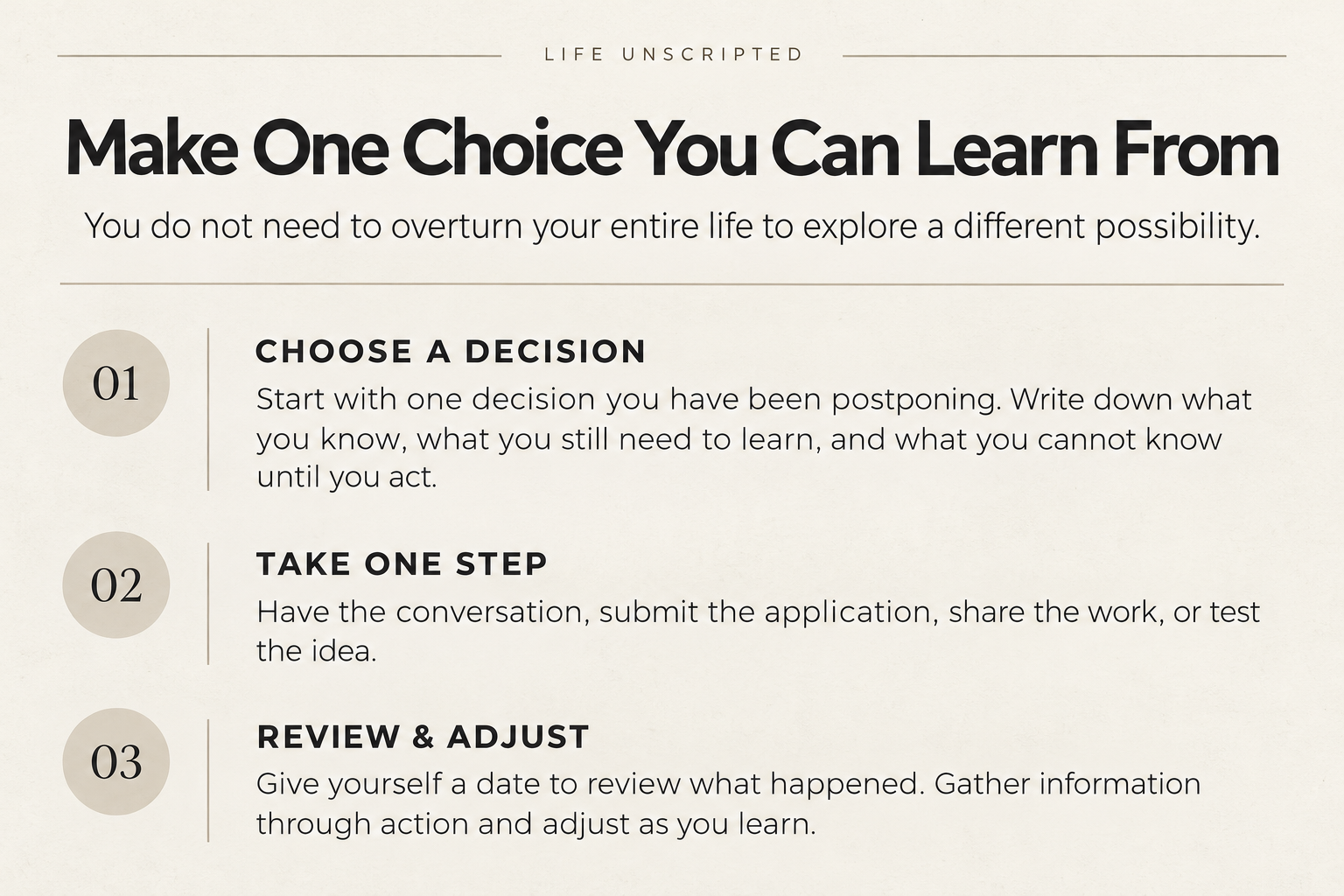
You do not need to overturn your entire life to explore a different possibility.
Start with one decision you have been postponing. Write down what you know, what you still need to learn, and what you cannot know until you act. Choose a manageable next step: have the conversation, submit the application, share the work, or test the idea. Give yourself a date to review what happened. You can gather information through action and adjust as you learn.
Let Your Own Point of View Count
The performances I remember have something personal in them: a rhythm, a pause, a choice that feels alive. Your life deserves that same specificity. Your preferences, instincts, and ambitions deserve a place in your decisions, even when they are difficult to explain.
Before making your next safe choice, pause long enough to ask what it protects—and what it costs.
UNSCRIPTED QUESTION:
Where are you choosing certainty over possibility simply because it feels safer?
Write down one answer. Then name one action you can take this week to explore what is possible.