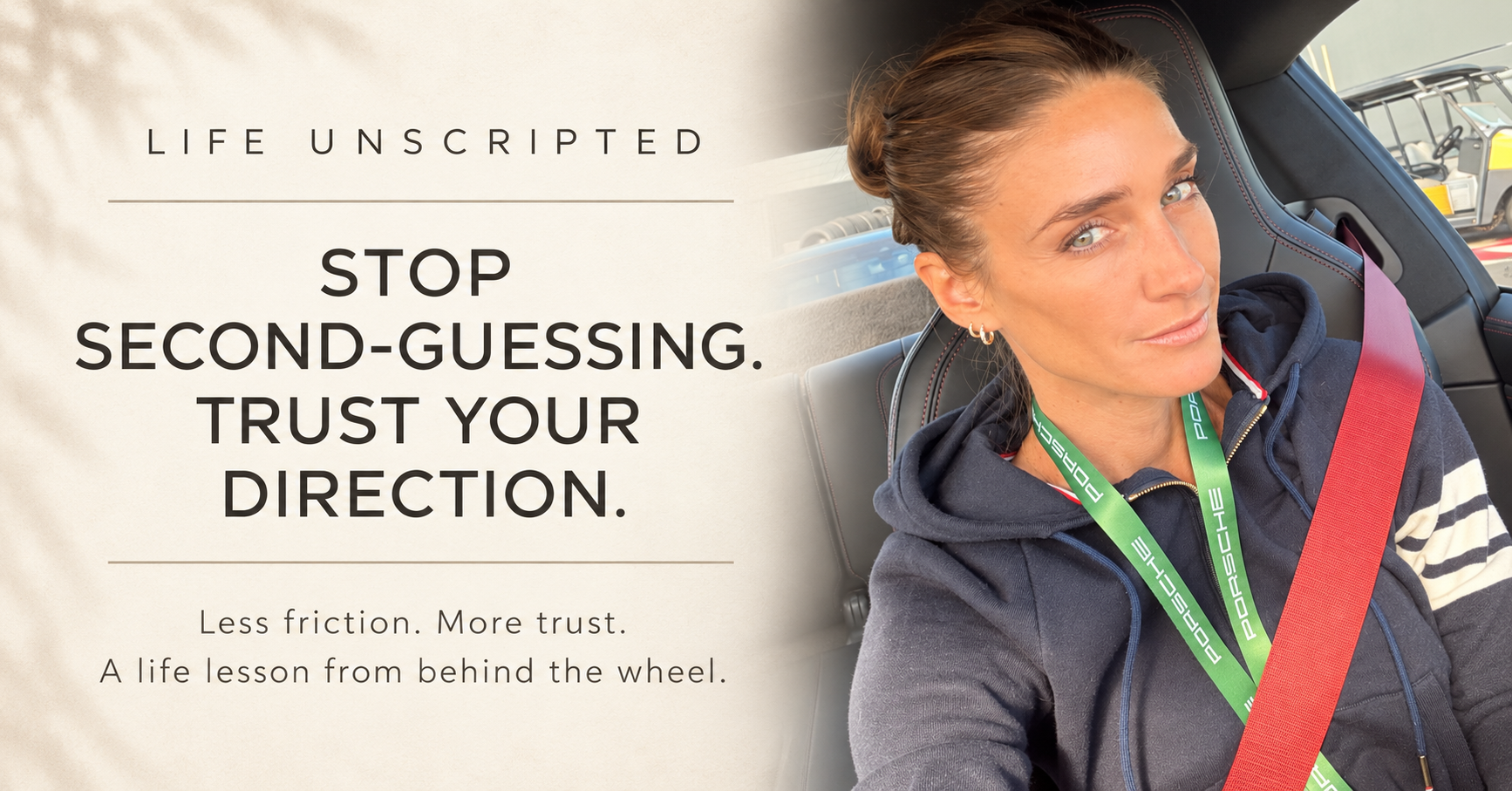
Less friction. More trust. A surprising life lesson from behind the wheel of a Porsche 911.
I love cars. Always have. Since I was in my early teens, I've dreamed of owning a Porsche 911. Black on black. Hardtop. Carbon-fiber interior details. Matte rims. Red calipers. Manual transmission. Odd for a girl? I beg to differ. I've always been a woman who knows what she wants, and I've never felt the need to apologize for it. However, knowing exactly what you want doesn't necessarily mean you won't get in your own way along the journey. Trust me, I've become quite skilled at that, too.
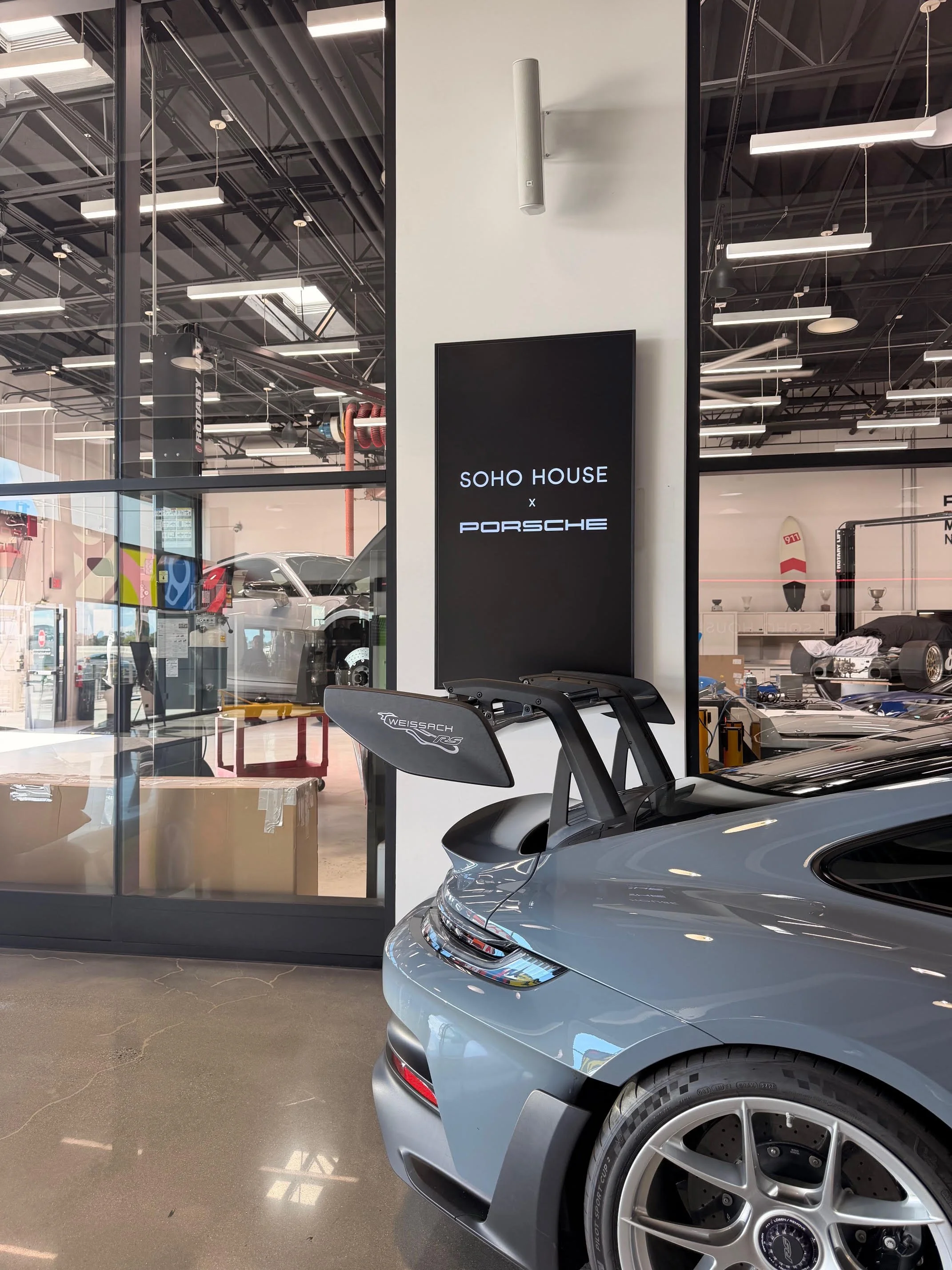
Recently, I had the opportunity to drive a Porsche 911 Carrera GTS at the Porsche Experience Center Los Angeles with Soho House. We spent the day pushing the car through tight corners, learning how to handle the track, and reaching 122 mph on the straightaway. For someone who has loved cars for as long as I can remember, it was everything I'd hoped it would be. Yet, what stayed with me afterward wasn't the adrenaline, the horsepower, or even the speed. It was a surprisingly simple lesson about self-trust.
What the Racetrack Taught Me About Trusting Myself
As we navigated the course, my instructor, Cam, kept reminding me over the radio to trust the car, particularly through the turns. The objective wasn't to grip the steering wheel harder or make constant adjustments. It was to find the smoothest line, hit the apex, maintain control, and allow the car to do what it was designed to do. Every unnecessary correction created friction. Braking too early disrupted momentum, while oversteering made the turn more difficult than it needed to be.
The more I trusted the car and committed to the line, the smoother everything became. It was fascinating to experience how something that initially felt counterintuitive could make such an immediate difference. Instead of trying to control every little movement, I needed to understand the direction, make the necessary adjustments, and trust the process.
Somewhere between those turns, I started thinking about how often we do the exact opposite in our own lives.

Why We Second-Guess Ourselves
Think about the last time you made a decision that genuinely felt right. Perhaps it involved a career opportunity, a relationship, a business idea, or a personal goal you'd been considering for years. You knew what you wanted, and for a moment, the direction seemed clear. Then someone offered an opinion, something unexpected happened, or uncertainty crept in. Suddenly, you were questioning a decision you'd already spent considerable time making.
We do this constantly. We revisit conversations, imagine worst-case scenarios, ask for additional opinions, and convince ourselves that another round of analysis will somehow guarantee the right outcome. Sometimes, careful consideration is necessary. However, there's a difference between thoughtfully evaluating a decision and repeatedly questioning ourselves because we're uncomfortable with uncertainty.
Overthinking can create the illusion of progress while keeping us in exactly the same place. Much like overcorrecting on the racetrack, every unnecessary adjustment can interrupt the momentum we've worked so hard to build.
How to Stop Overthinking and Build Self-Trust
Learning how to stop second-guessing yourself doesn't mean becoming reckless, ignoring feedback, or refusing to change your mind. Self-trust is not blind confidence. It's the ability to make decisions based on your values, experience, and available information while accepting that you cannot control every outcome.
One of the most valuable lessons from the track was the importance of looking where you want to go. When you're driving, focusing too much on what you're trying to avoid can interfere with the line you're attempting to follow. The same principle applies to personal growth. When our attention becomes consumed by everything that could go wrong, we lose sight of what we're actually working toward.
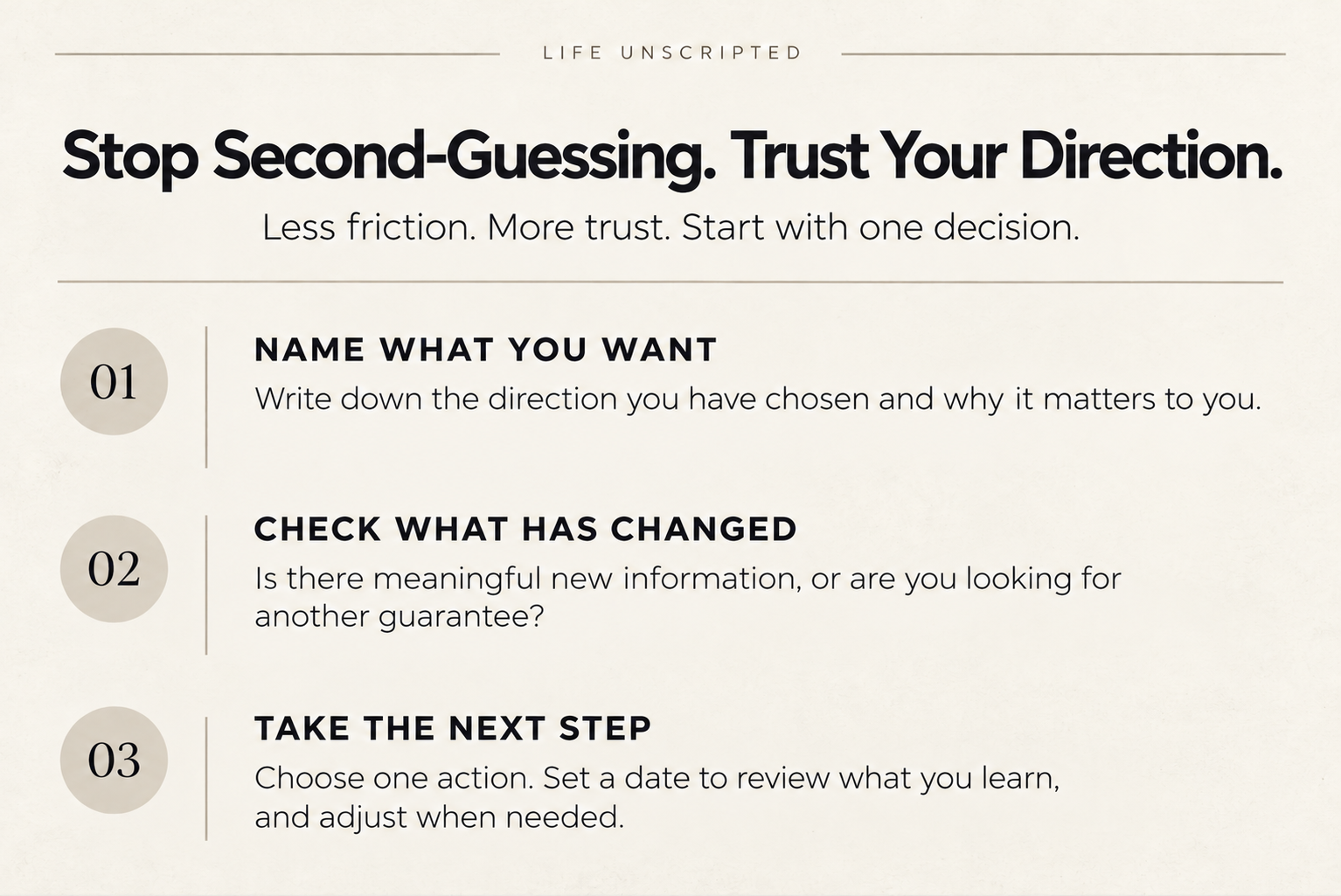
Building decision-making confidence begins with understanding your direction. What do you genuinely want? Why does it matter to you? Are you reconsidering because you've discovered meaningful new information, or because someone else's opinion has made you question your own judgment? These distinctions matter, especially when we're navigating significant changes.
There will always be moments when changing course is necessary. Sometimes, the smartest decision is to slow down, reassess, or take an entirely different road. Trusting yourself means recognizing those moments without allowing fear to dictate every move. It also means developing confidence in your ability to handle unexpected circumstances rather than demanding certainty before taking action.
Sometimes Moving Forward Requires Less Effort
Driving that Porsche reminded me that progress doesn't always come from pushing harder, planning more, or trying to control every detail. Sometimes, the very habits we believe are protecting us are creating unnecessary resistance. We grip the wheel tighter, second-guess our instincts, and make adjustments that aren't actually needed.
There's something liberating about recognizing that you can be intentional without being controlling, ambitious without constantly forcing outcomes, and confident without having every answer. You can know where you're going while remaining flexible enough to navigate whatever appears along the way.
Perhaps the next level of personal growth isn't about doing more. Perhaps it's about learning when to stop interfering with your own momentum and giving yourself permission to trust the direction you've chosen.
Know where you're going. Trust your instincts. Make adjustments when they're genuinely necessary. Then stop fighting the wheel.
UNSCRIPTED QUESTION:
Where in your life are you creating unnecessary friction by second-guessing a direction you already know you want to take?
Consider what might change if you stopped asking for another guarantee and started trusting yourself to navigate the road ahead.